




Understand the Difference between Servo Motor and Stepper Motor
In many electrical systems, movement is not about spinning fast. It is about stopping exactly where needed. Whether it is a robotic arm, a medical device, or a small automation setup, controlled motion decides how reliable the system feels. This is where confusion often starts, especially when people try to understand the difference between stepper motor and servo motor.
At first glance, both motors seem to solve the same problem. Both rotate, both are used for positioning and both appear in automation discussions. But once they are installed and used in real conditions, the difference between servo and stepper motor becomes very clear. This article breaks that difference down in plain language.
Servo Motors
When someone asks what is servo motor, the technical answer usually sounds complex. In reality, the idea is simple. A servo motor never assumes it is correct. It constantly checks its own position and fixes mistakes. This self-checking behavior is the foundation of everything a servo motor does.
The servo motor definition describes a motor that uses feedback to control motion. A sensor is attached to the shaft. This sensor tells the controller where the motor actually is. If the position does not match the command, the controller adjusts the power instantly. This feedback loop never stops running. Key features that make servo motors smart are as follows.
• Servo motors operate using a closed-loop system. This means speed, torque, and position are adjusted continuously. If the load changes suddenly, the motor responds immediately. This is one of the biggest reasons the difference between stepper motor and servo motor matters in real machines.
• Servo motors do not lose track of position easily. Even if something pushes against the shaft, the system notices.
• Servo motors are comfortable running at higher speeds. They also maintain torque across a wide speed range. This makes them suitable for dynamic tasks where movement is not uniform or predictable. This ability to adapt is why servo motors appear in high-end automation.
• Servo motors are used in CNC machines, industrial robots, automated packaging systems, antenna tracking units, and camera stabilization equipment. These are environments where guessing position is not acceptable.
Stepper Motors
Stepper motors take a completely different approach. Instead of checking position, they trust the instruction given to them. To properly define stepper motor, this trust-based operation is important.
Stepper motors move because they are told to move. They do not move because they verified that movement happened.
The stepper motor definition explains a motor that divides one full rotation into equal steps. Each electrical pulse equals one step. If the controller sends 200 pulses, the motor moves 200 steps.
Stepper motors work using an open-loop system. The stator windings energize in sequence. Magnetic attraction pulls the rotor forward step by step. The motor stops exactly where the pulses end. As long as the load remains stable, this works well.
Stepper motors are widely used in 3D printers, desktop CNC machines, textile machinery, scanners, and medical pumps. These systems usually operate under controlled loads and fixed speeds.
The Limitation Most People Miss
If a stepper motor is overloaded, it can miss steps. When this happens, the controller does not know. The system continues operating with incorrect position data. This is a critical difference between stepper motor and servo motor that affects reliability.
Difference Between Stepper Motor and Servo Motor in Real Conditions
The difference between stepper motor and servo motor is easiest to see when conditions are no longer ideal.
Feedback vs Assumption
The biggest difference between servo and stepper motor is feedback. Servo motors verify position continuously. Stepper motors assume every step occurred. This single distinction changes how each motor behaves under stress.
Speed Behavior
Stepper motors perform best at low speeds. As speed increases, torque drops. Servo motors handle higher speeds comfortably while maintaining control. This is why servo motors dominate fast automation systems.
Accuracy Over Time
Stepper motors are accurate as long as nothing goes wrong. Servo motors are accurate even when things do go wrong. That difference explains what is the difference between stepper motor and servo motor better than any definition.
Complexity and Cost
Stepper motor systems are simpler and cheaper. Servo systems require tuning, controllers, and feedback devices. Complexity increases cost, but it also increases reliability.
| Basis | Servo Motor | Stepper Motor |
|---|---|---|
| Basic Idea | Uses feedback to constantly correct its movement | Moves in fixed steps based on input pulses |
| Definition | A motor controlled using a feedback-based servo mechanism | A brushless DC motor that rotates in discrete steps |
| Control System | Closed-loop control system | Open-loop control system |
| Feedback Mechanism | Uses encoder or resolver to monitor position | No feedback device used |
| Motion Type | Continuous and smooth rotation | Step-by-step angular movement |
| Position Accuracy | Very high, even under load changes | Accurate only if no steps are missed |
| Error Correction | Automatically corrects position errors | Cannot detect or correct missed steps |
| Torque at Low Speed | Moderate | High |
| Torque at High Speed | Maintains torque effectively | Torque drops significantly |
| Speed Capability | Suitable for high-speed operation | Best for low to medium speeds |
| Load Handling | Handles varying and dynamic loads well | Best for stable, predictable loads |
| Noise and Vibration | Low noise, smooth motion | More vibration due to stepping |
| Power Consumption | Draws power based on demand | Draws constant current even at standstill |
| Efficiency | Higher overall efficiency | Comparatively lower efficiency |
| System Complexity | Requires controller, tuning, and feedback | Simple driver-based system |
| Cost | Higher initial cost | More cost-effective |
| Reliability | Depends on electronics and tuning | Mechanically simple and reliable |
| Typical Applications | Robotics, CNC machines, automation systems | 3D printers, scanners, textile machines |
| Use with Motor Starter | Often integrated with advanced Motor Starter systems | Usually uses basic drivers instead of starters |
| Industrial Usage | Common with 3 Phase Motor Starters | Mostly used in low-power applications |
Servo Motor vs Stepper Motor: Which One Feels Right?
The servo motor vs stepper motor decision is rarely about which motor is “better.” It is about which motor fits the situation. Stepper motors feel rigid and predictable. Servo motors feel adaptive and responsive.
Stepper motors draw current even when holding position. Servo motors adjust power based on demand. Over long operating hours, this affects efficiency.
Noise is another difference. Stepper motors can vibrate due to stepping action. Servo motors usually operate quietly.
Motor Starter Importance
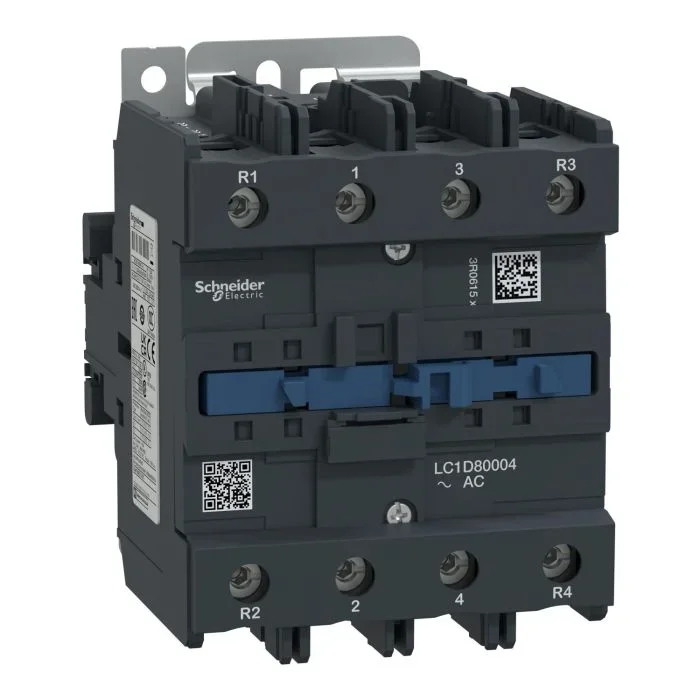
A Motor Starter is not optional in serious systems. It controls how power reaches the motor during startup and operation. Without a Motor Starter, motors may draw excessive current when starting. This can damage windings, reduce lifespan, and stress the electrical supply.
Motor Starter in Servo Systems
Servo motors often use integrated Motor Starter functions inside servo drives. These starters ensure smooth acceleration and protect sensitive electronics.
Motor Starter in Stepper Systems
Stepper motors usually rely on drivers instead of traditional starters. However, protection circuits still matter for safety and reliability.
Also Read: DC Servo Motor: Construction, Working & Its Applications
Importance of 3 Phase Motor Starters in Industrial Use
Larger systems frequently use three-phase power. This makes 3 Phase Motor Starters essential. 3 Phase Motor Starters regulate current and voltage during startup. They prevent electrical shock loads and protect motors from phase imbalance.
Industrial servo motors often run on three-phase supply. 3 Phase Motor Starters help maintain smooth torque delivery and consistent speed. Using 3 Phase Motor Starters improves safety, efficiency, and equipment lifespan. They are standard practice in automation-heavy environments.
Making the Right Choice
Choosing between these motors is about understanding behavior, not memorizing specifications.
Servo motors are ideal when loads vary and accuracy must be guaranteed. Stepper motors are ideal when movement is predictable and cost matters.
Knowing the difference between servo and stepper motor avoids performance issues later.
Conclusion
The difference between stepper motor and servo motor comes down to confidence versus correction. Stepper motors move confidently but blindly. Servo motors move carefully, always checking their position.
When supported by the correct Motor Starter or 3 Phase Motor Starters, both motors perform reliably within their limits. Understanding what is the difference between stepper motor and servo motor ensures the right motor is chosen- not just for today, but for long-term operation.
Frequently Asked Questions
Q1. Can a stepper motor be upgraded to work like a servo motor?
Ans. Yes, a stepper motor can be converted into a “closed-loop stepper” by adding an encoder and compatible driver. This setup allows the system to detect missed steps and correct position errors. However, even with feedback, it does not fully match the dynamic speed and torque performance of a true servo motor.
Q2. Do servo motors require regular calibration or tuning?
Ans. Servo motors usually require initial tuning to match the motor, controller, and load characteristics. Once tuned properly, they do not need frequent recalibration unless mechanical changes occur, such as load variation, coupling changes, or replacement of feedback components.
Q3. What happens if power is lost in servo and stepper motors?
Ans. When power is lost, both motors stop immediately. Stepper motors typically lose holding torque and position unless a brake is used. Servo motors may retain position briefly if equipped with mechanical brakes, which are common in vertical or safety-critical applications.
Q4. Are stepper motors suitable for continuous operation over long hours?
Ans. Stepper motors can run continuously, but prolonged operation at high current may cause overheating. Proper current limiting, cooling, and duty cycle management are essential to ensure long service life, especially in industrial or medical equipment.
Q5. How does environmental condition affect servo and stepper motors?
Ans. Dust, vibration, and temperature fluctuations impact both motors, but servo motors are generally more sensitive due to encoders and electronics. Stepper motors, with simpler construction, tend to tolerate harsher environments better when protected from moisture and excessive heat.

Comments