



What is a Lighting Control System? Types, Smart Lighting and Benefits
Summary
Lighting accounts for a visible share of household electricity use, and control is the easiest way to trim it. This guide explains what is a lighting control system and how home lighting control works in plain words. It covers the main types of lighting control systems, how does smart lighting work through sensors and wireless links, and how to automate home lights with schedules and scenes. It also lists the benefits of smart lighting, with real figures on energy, comfort and safety.
Key Takeaways
- Lighting control systems manage when lights operate, their brightness, and how they respond to user commands or environmental conditions.
- Manual switches, dimmers, timers, sensors, wired networks, and wireless systems offer different levels of control and automation.
- Smart lighting uses Wi-Fi, Zigbee, Z-Wave, or Thread to connect lights with apps, sensors, and voice assistants.
- LED lamps combined with dimming, scheduling, and occupancy sensing can reduce lighting energy consumption by 40 to 60 percent.
- Smart bulbs offer colour and brightness adjustments, while smart switches control existing bulbs connected to the circuit.
- Choosing suitable lighting controls depends on wiring, budget, room requirements, network reliability, energy savings, and convenience.
Introduction
A practical home lighting control plan starts with the rooms, routines and lighting needs of the household. Go into a house at night and see how many lights are still on. In most homes there are at least two. Though people don't intend to waste electricity, it's easy to forget to turn off a switch at the far end of a corridor. Control solves this without any fuss. Home lighting control includes everything from a simple wall dimmer to a complete network of sensors, switches and apps. It reduces bills, increases comfort and gives the house a greater sense of security when no one is around. Consider the situation when you get home with your hands full. Lights that switch on automatically are much more useful than having to search for a switch. The sections that follow deal with the components, the various types and the steps for setting it up.
What is a Lighting Control System
For a home, what is a lighting control system depends on how switches, sensors and controllers are arranged. A lighting control system consists of various devices which switch on or off the lights, reduce their intensity and arrange for them to be operated according to a specific logic. In the most basic form it is simply a wall switch connected to a circuit. In its most advanced form the system links together sensors, switches, drivers and a central controller. The work is carried out by three layers: input devices like switches, motion sensors and light sensors pick up the need; the controller then decides on the action to be taken; and output devices such as relays, dimmer modules and LED drivers carry out the command. Ordinary household circuits operate at 230 volts and 50 hertz, whereas the low voltage signal wiring works at 12 volts or 24 volts. In fact, the majority of modern houses already have a small such system present, as even a dimmer alone counts as one.
Types of Lighting Control Systems
A useful way to answer what is a lighting control system is to consider how it controls switching, brightness and schedules. The types of lighting control systems range from manual switches and dimmers to connected sensors and app-based controls.
Manual and Dimmer Control
A manual switch can be used to turn the light on or off, whereas a dimmer adjusts the brightness by modifying the voltage waveform. Leading-edge dimmers are suitable for use with incandescent and halogen lamps, while trailing-edge dimmers work better with LED lamps and help to reduce buzzing. Reducing the output of an LED to 50 per cent results in a decrease in power of approximately the same amount. It is necessary to make sure that the lamp is labelled as dimmable, because a mismatch will cause flickering and reduce its lifespan.
Timer and Sensor Control
Lights are switched on by timers at fixed times and also by sensors in response to presence or daylight. A passive infrared sensor picks up body heat and switches on the lamps whenever a person enters. The photocell causes the outdoor lights to turn on at dusk. The corridors, bathrooms and garages gain the most from this because usage is short and unpredictable. Energy usage for lighting in these areas can be reduced by 30 to 50 percent through occupancy sensing.
Wired Networked Control
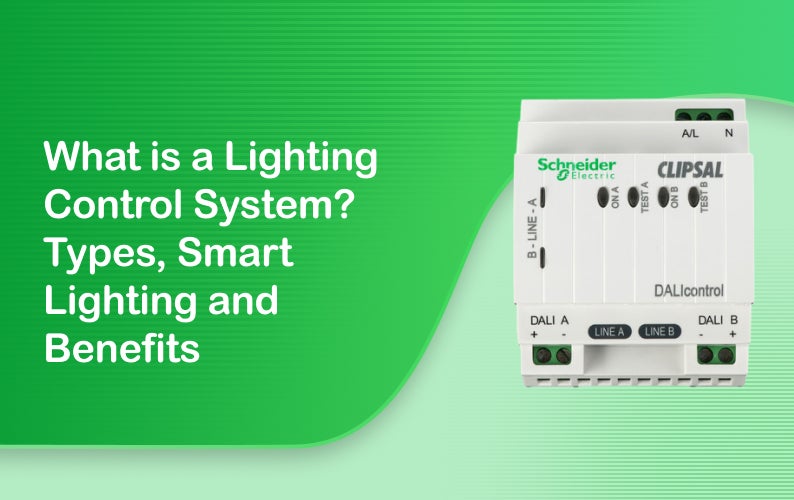
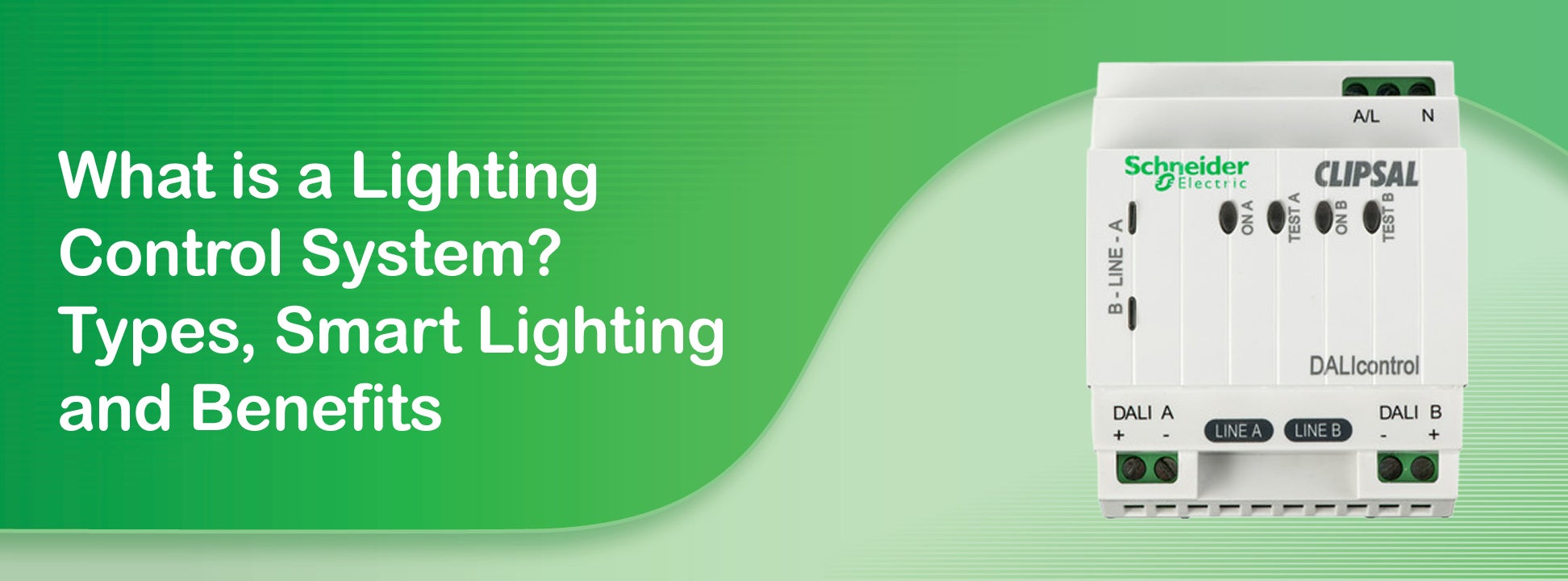
Wired systems employ protocols including DALI, KNX and 0-10 V dimming. A DALI network is capable of addressing up to 64 devices using a single pair of wires and allows each lamp to be dimmed separately. KNX provides a solution that integrates lighting, blinds and heating. The cabling is organised during the construction phase, which means that these systems are appropriate for new buildings and for large renovations. They are very reliable since their signals do not rely on Wi-Fi.
Wireless Smart Control
Wireless systems allow control to be exercised without the need to open up the walls; light bulbs, switches and plugs can all be connected using Wi-Fi, Zigbee, Z-Wave or Thread. A hub or router then transfers the commands from a phone or a voice assistant. With Zigbee and Z-Wave, mesh networks are formed in which each device forwards the signals and as a result the range is increased. Wireless systems are suitable for use in rented properties and in older houses since fitting new cables would be expensive.
How Does Smart Lighting Work
To understand how does smart lighting work, it helps to look at the connection between the control app, network and light. By using smart lighting, a lamp or a switch can be turned into a networked device. Inside the bulb or the switch there is a small radio and a processor which listen for commands. The entire process, from the tap to the light coming on, is explained by a few moving parts.
Sensors, Radios and Controllers
Testing the network and naming each device are important steps in how to set up smart lighting at home. This explains how does smart lighting work when a command travels from a phone or sensor to a connected light. A command is initiated by a phone, a wall switch, a sensor or a schedule and then goes over Wi-Fi, Zigbee or Z-Wave to the device. Zigbee operates on the 2.4 GHz frequency, whereas Z-Wave uses a sub-1 GHz band which passes through walls effectively. The device picks up the signal and its microcontroller switches the load or alters the dimming level within approximately 100 milliseconds. In most cases, the system also sends status information back to the app.
How Does a Smart Light Switch Work
In practice, a smart light switch operates by means of a relay located inside it which opens and closes the circuit for the lamp, and a small radio chip which picks up the commands. Since the electronics have to be powered even when the lamp is switched off, most of the models require a neutral wire in order to get a few milliwatts of power. Others make use of a small leakage current through the lamp. The physical button remains functional, so guests are able to use the lights without having to rely on an app.
Smart Bulbs Versus Smart Switches
The relay and wireless chip explain how does a smart light switch work when it receives an app command. Since the electronics are built into the bulb, it does not require any rewiring. It also enables colour changes as well as tunable white light ranging from 2,700 K to 6,500 K. A smart switch is able to control any bulb on that circuit, something which is useful when there are several lamps in the fixture. With a smart bulb, the wall switch must remain on or the bulb will lose power and fall off the network.
How to Automate Home Lights
Learning how to automate home lights begins with choosing devices and deciding which actions should happen automatically. Lights can be made to operate without having to tap them by means of automation. The process begins with a functional network and a number of clear objectives. The steps involved are straightforward and it takes less than an hour to install them in a typical room.
How to Set Up Smart Lighting at Home
A room-by-room device list is a useful starting point for how to set up smart lighting at home. To get started with fitting smart lighting in your home you first need a plan; make a list of the rooms and then select the bulbs or switches for each one. Fit the devices, connect them to a 2.4 GHz network or to a hub and give each light a clear name for example Hall or Kitchen. In the app group the lamps by room. Test each light before setting up any rules. It is important to have a good signal at each light fitting to prevent any dropouts later.
How to Control Home Lights with Phone
The app-based method shows how to control home lights with phone access, whether at home or away. Once the devices have been paired, it is simple to control the lights in your home. The app displays each room and includes controls for turning the lights on and off, dimming them and changing their colour. You can access the lights from a distance via a cloud connection, meaning that the lights will respond even when you are in another city. Voice commands can be carried out using a smart speaker. When you share access with family members, each person can use their own phone, and there is also a guest mode which limits access.
Schedules, Scenes and Triggers
For remote operation, learning how to control home lights with phone controls also requires a stable connection. Schedules and motion triggers offer a straightforward example of how to automate home lights. The behaviour is determined by rules. A schedule causes the lights to switch at specific times. A scene turns on several lamps at the same time, for instance by setting a 30 percent warm glow in the evening. A trigger responds to an event, such as a door sensor or sunset. For example, when motion is detected after 11 p.m. the hall lights can be raised to 40 percent. Since sunrise and sunset times change each day, the triggers remain accurate throughout the year.
Benefits of Smart Lighting
The benefits of smart lighting include lower wasted energy, easier routines and more flexible control over brightness.
The argument for having control is based on tangible benefits: energy consumption decreases, comfort increases and security is enhanced. The advantages of smart lighting become more noticeable the greater the number of rooms that are covered, and they are seen within the first month of use.
Lower Energy Use and Costs
Among the benefits of smart lighting, reducing the time lights remain on unnecessarily can make a measurable difference. The number of hours during which the lights are dimmed, the times at which they are switched on and off, and the detection of occupancy help to avoid wasting hours. A 10 W LED lamp that remains on for an extra five hours each day wastes around 18 kWh per year, and this amount increases when you have twenty such lamps. When LED lamps are used together with control systems, lighting energy can be reduced by 40 to 60 percent. In many houses, the investment in smart switches is recovered within two to three years.
Comfort and Wellbeing
In the evening warm light is followed by cooler light during the day in accordance with the body's natural rhythm. Tunable white lamps change from 2,700 K at night to 5,000 K at midday. Also, dimmed lights decrease the glare when using screens. Different lighting scenes are provided for reading, dining and watching movies so that each room has a specific purpose. Automatic night lighting routes are provided to help reduce the risk of falls among older family members.
Security and Convenience
Lights coming on when a house is unoccupied give the impression that the house is occupied, thereby discouraging intruders. Outdoor lights that are switched on by movement also indicate to visitors that someone is at the door. A remote control is useful when a family is travelling, and alerts are provided when a light remains on. When carrying out an upgrade, replacing the light switch covers with new ones gives a tidy finish on top of the new wall plates.
Conclusion
When replacing fittings, check that the light switch covers match the wall plates and switch design. Comparing the types of lighting control systems helps homeowners select an option that suits their wiring and budget. For many households, home lighting control is a simple first step towards a more convenient smart home.
Lighting control can go from using a simple dimmer all the way through to a complete system based on a network of sensors and switches. Each additional level brings about greater savings, more comfort and improved safety. Wired systems are appropriate for new constructions, whereas wireless systems are better for existing houses. The best outcome can be achieved by carefully planning the layout of the rooms, the wiring and the rules. For switches, sockets, dimmers and smart home devices, Schneider Electric's eShop provides a wide variety of electrical products suitable for modern homes.
FAQs
1. Do smart switches work during a power cut?
No. Without mains power, the radio and relay stop. Manual switches resume normal operation once supply returns, and most devices restore their last state.
2. Can LED lamps be used with any dimmer?
No. LED lamps need a compatible dimmer, usually trailing-edge or a model rated for low loads. A minimum load of 5 to 10 W may apply.
3. What is a neutral wire, and why does it matter?
A neutral wire completes the circuit back to the supply. Smart switches use it to power their electronics, and older homes often lack it at the switch box.
4. How secure are smart lighting systems?
Security depends on a strong Wi-Fi password, regular firmware updates and two-factor sign-in. Zigbee and Z-Wave use AES-128 encryption for device traffic.
5. How many smart devices can one network support?
A home router usually handles 30 to 50 Wi-Fi devices. A Zigbee hub can handle 50 or more, and Z-Wave supports up to 232 devices per network.
Comments