




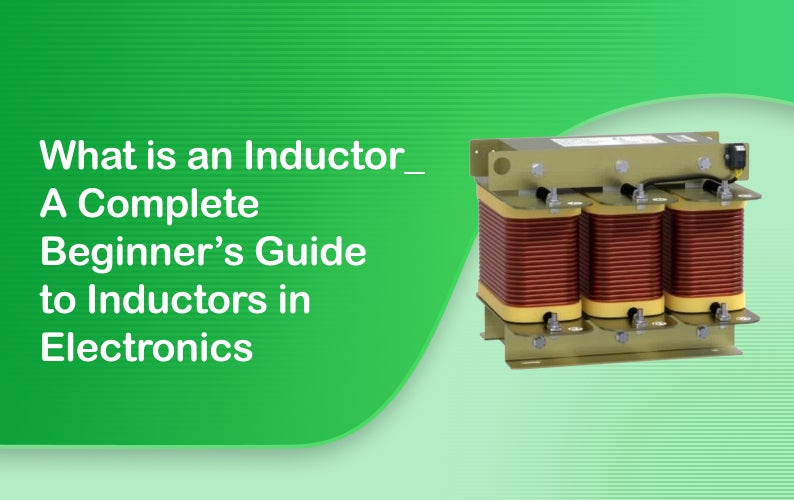
What is an Inductor? A Complete Beginner's Guide to Inductors in Electronics
Summary
So, what is an inductor, really? In short, it's a coil of wire that stores energy in a magnetic field. It pushes back against sudden changes in current too. This guide covers the inductor symbol used on circuit diagrams, how does an inductor work in real circuits, and the everyday uses of inductor parts in radios, chargers, and power supplies. Whether the question is what does an inductor do or how does an inductor store energy, this breaks it down in plain words.
Key Takeaways
• An electrical inductor stores energy in a magnetic field, not an electric field.
• Inductance opposes sudden changes in current, not current itself.
• Core material, iron, ferrite, or air, shapes how well an inductor performs.
• Inductors filter signals and store energy inside switching power supplies.
• The unit of inductance is the henry, named after Joseph Henry.
Introduction
Ever wonder how a radio locks onto one station out of dozens? Or how a phone charger delivers smooth, steady power? Both rely on a small, often ignored part called the inductor. It sits quietly next to resistors and capacitors, doing its own specific job. Think of a heavy flywheel. It takes effort to spin. Once moving, it resists stopping too. That's basically what an inductor does with electric current. This guide covers how they're built, the types out there, and where they actually show up in daily life.
What is an Inductor?
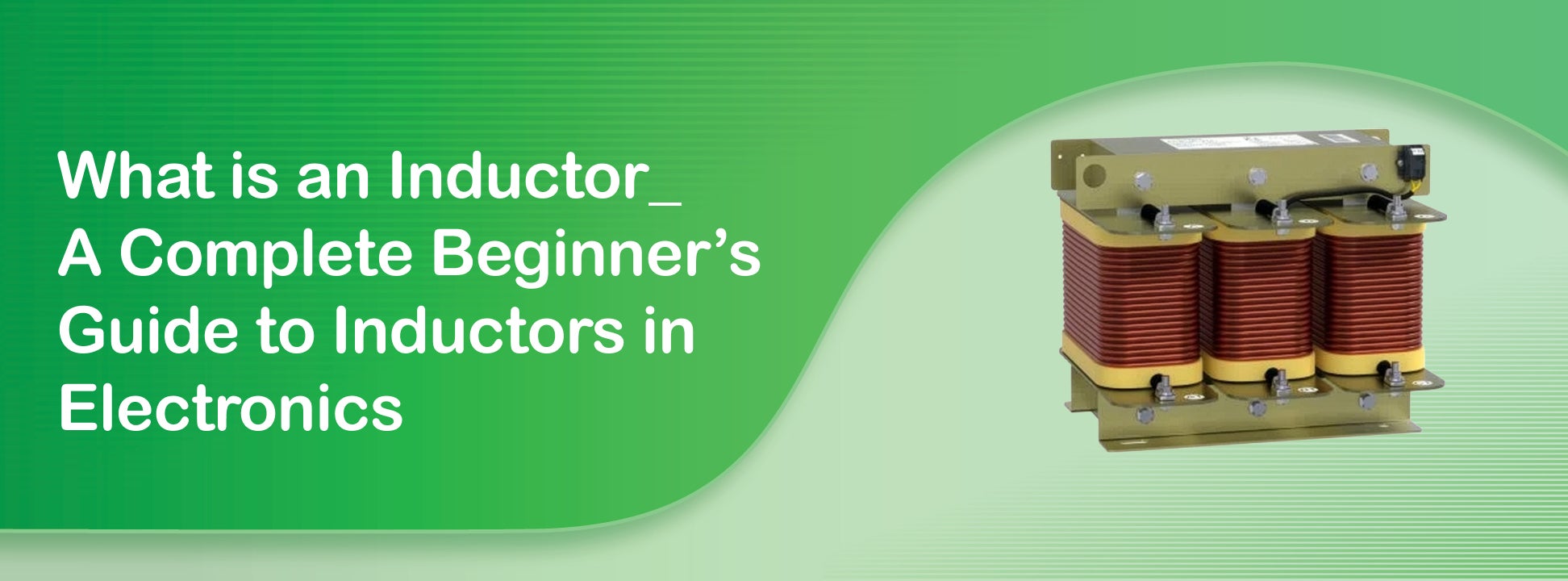
An inductor is a passive part that stores energy in a magnetic field once current flows through it. Some call it a coil. Others say choke. Both names point to the same basic build: insulated wire wound into loops, often wrapped around a core.
The defining trait is inductance. That's its natural pushback against any change in current. Picture that flywheel again. Getting it spinning takes effort. Stopping it takes effort too. An inductor works the same way. Steady current flows through with little fuss. Try to change that current fast, though, and the inductor fights back. It releases stored energy to keep things moving. This all comes from electromagnetic induction, and it gets measured in henries, a unit named after the scientist who first studied it.
Construction of an Inductor
Building one looks simple on paper. Small design choices still change performance a lot, though. Two parts matter most here: the coil itself, and whatever core sits inside it.
The Coil and Winding
Most inductors use insulated copper wire, wound into tight loops. More turns mean a stronger magnetic field. That means higher inductance. Fewer turns keep inductance low. This gives engineers a simple lever to pull. Want more inductance without changing the core? Add more turns. Simple as that.
Core Materials and Their Role
The core concentrates the magnetic field. That boosts inductance well past what an air-wound coil alone could manage. Iron cores handle high power well, though they lose efficiency at high frequencies. Ferrite cores strike a better balance for high-frequency work. Air cores skip magnetic material entirely, trading inductance for near-zero losses.
Types of Inductors
Not every inductor suits every job. Frequency, power level, and size all push engineers toward different core types. Each comes with its own strengths, and its own obvious trade-offs.
Iron Core Inductors
These use solid or laminated iron. They deliver high inductance and strong power handling. Audio gear and low-frequency power filters lean on them heavily. The downside shows up at higher frequencies. Energy losses inside the iron start eating into efficiency there, limiting their use in fast modern circuits.
Ferrite Core Inductors
Ferrite is a ceramic-like material made from iron oxides. It offers strong permeability with much better high-frequency behaviour than plain iron. That versatility puts ferrite core inductors everywhere, from switching power supplies to noise filters on cables. Soft ferrites handle regular inductor duty. Hard ferrites go into permanent magnets instead.
Air Core Inductors
With no magnetic core at all, these trade inductance for purity. Energy losses stay tiny even at very high frequencies. That makes them ideal for radio tuning circuits. Anyone asking what is the function of an inductor in a radio tuner is really watching an air core do precise, low-loss frequency work.
Functions of an Inductor
Two jobs cover most inductor uses. Shaping signals, and storing energy. Both come from the same trait, resistance to changing current, just applied a little differently depending on the circuit.
Filtering and Signal Control
Inductive opposition rises with frequency. So inductors block high-frequency signals while letting low-frequency or DC pass through freely. Paired with capacitors, which behave the opposite way, they build LC filters. This combo is exactly why a radio locks onto one station and ignores the rest nearby.
Storing Energy for Later Use
Energy flowing into an inductor doesn't just disappear. It turns into a magnetic field around the coil, ready to release the instant current gets cut. This is the whole idea behind switching power supplies, tucked inside nearly every modern charger plugged into an electrical socket at home.
Choking Unwanted Noise
Sometimes an inductor's only job is blocking noise. Placed in series with a power line, it resists sudden spikes or high-frequency interference. That smooths the signal before it reaches sensitive parts further down the line. Common in both audio gear and digital electronics alike.
How Does an Inductor Work
At the core of it, how does an inductor work comes down to one idea. Current builds a magnetic field. Any change in that field pushes back against whatever caused it.
The Basic Working Principle
The inductor working principle rests on electromagnetic induction. Current through the coil builds a magnetic field around it. Change that current, and the field changes too. That shifting field induces a voltage that opposes the original change. This pushback is what gives inductors their whole personality, electrically speaking.
Behaviour With Steady Current
Once current settles, the inductor stops fighting it. It acts almost like plain wire, offering very little resistance to a steady flow. That's why inductors feel nearly invisible in pure DC circuits once everything settles down.
Behaviour With Changing Current
The second current tries to rise or fall fast, the inductor resists. It releases or absorbs energy to smooth that shift out. This resistance to change, not to current itself, is the whole reason inductors get used for filtering and shaping signals everywhere.
Reading the Inductor Symbol
On a schematic, the inductor symbol looks like a row of curved loops or coils, sometimes with lines beside it marking a core. Learning to spot this symbol fast helps when reading a circuit diagram, telling an inductor apart from a resistor or capacitor at a glance.
How Does an Inductor Store Energy
Storing energy happens through the same magnetic field created by current flow. Knowing how does an inductor store energy explains why these parts turn up in nearly every power conversion circuit built today.
Converting Current Into a Magnetic Field
Voltage pushes current through the coil against its natural resistance to change. That work doesn't turn into heat, the way it would in a resistor. Instead, it becomes stored energy in the surrounding magnetic field, ready to release back into the circuit once conditions shift.
The Energy Storage Formula
Stored energy depends on inductance and the square of current, written as E equals one half L I squared. Higher inductance or higher current both mean more stored energy. This lets engineers predict how much energy a given inductor can hold under specific conditions.
Releasing Stored Energy
Cut the current supply, and the magnetic field collapses. That induces a voltage trying to keep current flowing a bit longer. Ignition coils in cars use exactly this trick, making a high-voltage spark by suddenly cutting current through a large inductor at just the right moment.
Uses of Inductor
From power supplies to radios, the uses of inductor parts stretch across nearly every corner of electronics. Each application leans on either the filtering trick or the energy storage trick covered above.
Power Supply Filtering
Switching power supplies use inductors to smooth out voltage ripples, turning rough, choppy current into a clean, steady output. Nearly every charger plugged into an electrical socket has at least one inductor doing exactly this, quietly guarding sensitive electronics from spikes and noise.
Radio Frequency Tuning
Air core inductors, paired with capacitors, form the tuning circuits inside radios and wireless receivers. Adjusting the inductance shifts which frequency the circuit locks onto, letting a receiver isolate one signal out of a crowded field of broadcasts nearby.
Motor and Transformer Applications
Inductive principles sit behind transformers and motor windings too, both relying on magnetic fields built by current flow. These use much larger inductance values than small signal circuits do, handling far greater power safely across industrial gear.
Noise Suppression in Cables
Small ferrite inductors, often shaped like clip-on beads, cut high-frequency noise along data and power cables. This keeps interference from spreading into nearby sensitive electronics, a common sight on computer cables and audio setups where clean signal actually matters.
Conclusion
An electrical inductor might look like nothing more than a coil of wire, yet its ability to store energy and resist sudden current changes makes it essential across modern electronics. From filtering noise to tuning a radio station, inductors quietly manage the flow of electrons behind nearly every device plugged into an electrical socket. Anyone sourcing inductors or related parts for a project can find a reliable range through the Schneider Electric eShop.
FAQs
Q1. Can an inductor be damaged by too much current?
Yes. Too much current can saturate the core or overheat the winding, which permanently hurts performance or damages the part entirely.
Q2. Does inductor size always match its inductance value?
Not directly. Core material and winding turns matter more than size, though higher inductance often does need a bigger core.
Q3. Why do some inductors have a coloured band or code printed on them?
These marks show inductance value and tolerance, much like resistor colour codes, allowing quick checks without pulling up a datasheet.
Q4. Can inductors be used safely in humid environments?
Most standard inductors handle normal humidity just fine, though sensitive setups may need sealed or coated parts to avoid corrosion.
Q5. Can an inductor be tested with a basic multimeter?
A standard multimeter checks continuity and rough resistance, but measuring actual inductance usually needs a dedicated LCR meter instead.
Comments