
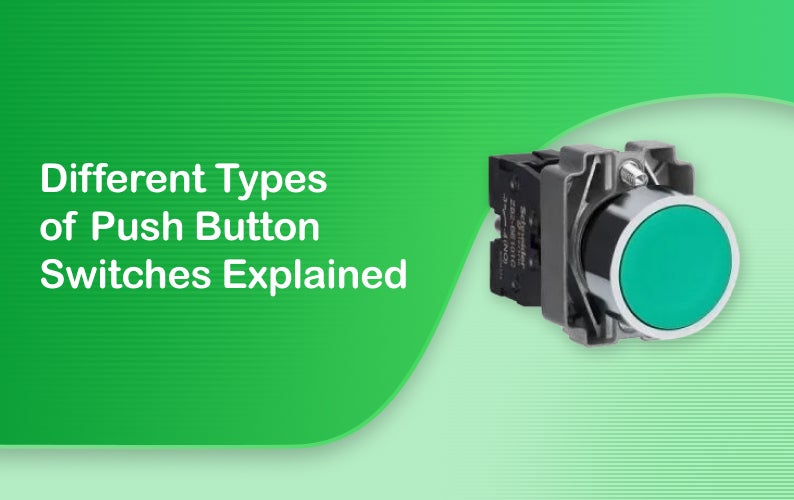
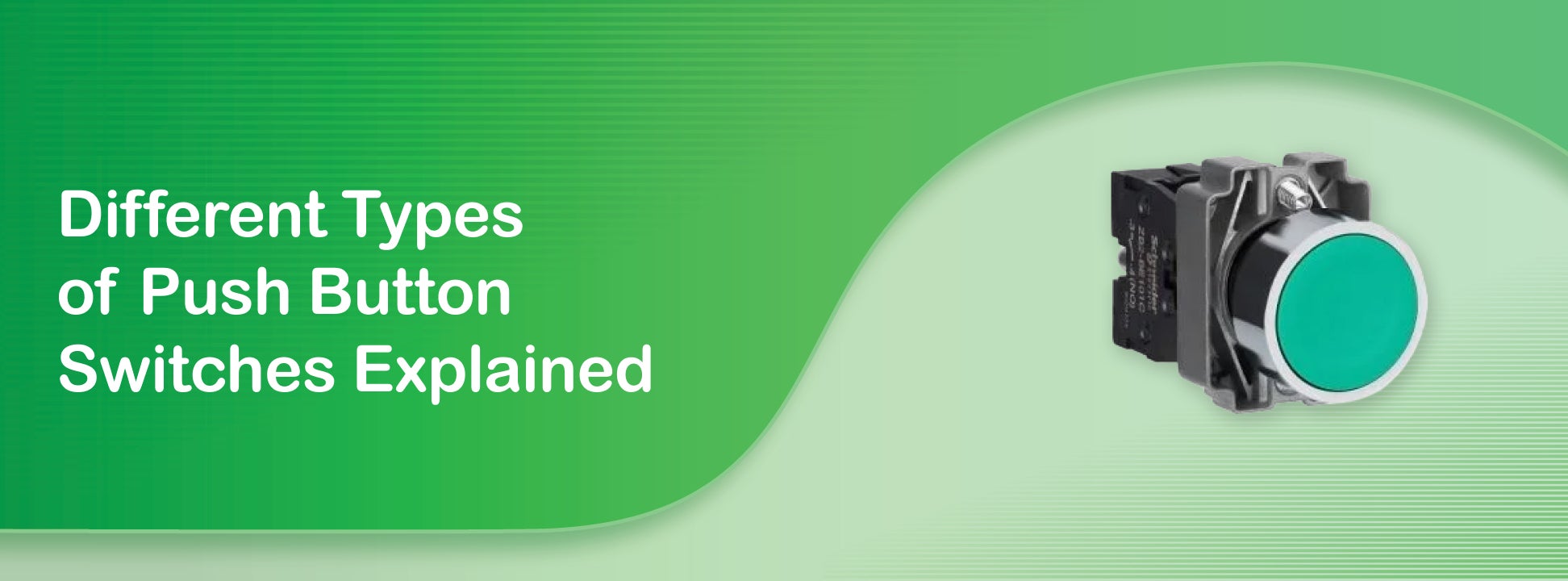
Different Types of Push Button Switches Explained
Summary
Press a button, something happens. That's really the whole idea. But the engineering behind it runs deeper than it looks. This guide covers push button types, from momentary to maintained, and breaks down push switch types by circuit shape and mounting style. Anyone weighing up different types of push button switches for a design will find the key specs and uses here, plus a wider look at electric switches in general.
Key Takeaways
• Push button switches work through a simple press, either momentary or maintained.
• Push button switch types include SPST, SPDT, DPST, and DPDT.
• Mounting ranges from through hole to surface mount to panel mount.
• Voltage, current, and IP ratings matter as much as size.
• Common uses span vending machines, factories, and everyday gadgets.
Introduction
A push button switch sounds too simple to write a whole guide about. Press it. Something turns on or off. Simple, right? Spend ten minutes comparing datasheets, though, and the picture changes fast. There are many push button types out there. Each one suits a different job, a different environment, a different price point. Pick the wrong one and a switch fails early, or just feels wrong under a finger. This guide covers how these switches work, the main categories worth knowing, and where they actually turn up in real products.
What are Push Button Switches
A push button switch is a mechanical part that controls a circuit when someone presses it. Underneath the cap sits a small spring-loaded mechanism. Press down, and it either completes or breaks a connection, depending on the build. Some call them pushbutton switches. Others just say push switches. The name shifts, but the job stays the same across almost every version on the market.
These switches show up constantly. Appliances, vending machines, power tools, arcade machines, industrial panels, all of them use push buttons somewhere. What many people don't realise is how much variation hides behind something this ordinary. Comparing push button switch types side by side shows real differences in circuit behaviour, mounting, and toughness. A switch built for a kitchen gadget is nothing like one rated for a factory floor, even though both get pressed the exact same way.
How Does a Push Button Switch Work
The mechanism is refreshingly simple, honestly. Pressing the button shifts an internal contact. That either opens or closes the circuit path, depending on how the switch was built in the first place.
Momentary Operation
A momentary switch stays actuated only while pressure is applied. Let go, and the circuit snaps back to its resting state right away. This suits things like doorbells, keyboard keys, or emergency stop buttons, where the action only needs to happen while someone is physically pressing down. No memory. No latch. Just a short, temporary connection, then nothing.
Maintained Operation
Maintained switches behave differently. Press one, and it locks into its new state until pressed again. Power buttons on many devices work this way. An LED indicator often gets paired with maintained switches too, giving a fast visual cue about whether the circuit is currently live. That small touch makes a real difference in low light, more than people usually expect.
Different Types of Push Button Switches
Beyond momentary and maintained behaviour, push button types split further by circuit setup. Knowing these categories helps engineers pick the right part instead of just grabbing whatever sits in the parts bin already.
SPST Switches
Single pole, single throw switches carry just two terminals. Simplest option going. They open or close one circuit, nothing more. A motor being switched on and off is the classic example here. Because they're so simple, SPST switches tend to run cheaper and easier to source, which explains why they show up so often in high-volume consumer products.
SPDT Switches
Single pole, double throw switches add a third terminal. That lets one press control two separate circuits instead of one. Think toggling between two LEDs, or shifting a device from standby into active mode. SPDT switches offer more flexibility than SPST without much added complexity, which is exactly why they turn up in gear needing a simple mode selector.
DPST and DPDT Switches
Double pole types control two isolated circuits at once. Either together, as with DPST, or independently, as with DPDT. Handy when one circuit runs high voltage and another runs low voltage, keeping them electrically apart while still triggered by a single press. These push switch types cost more, sure, but they solve problems single pole designs simply cannot touch.
Mounting and Termination Styles
Physical mounting matters just as much as circuit type, maybe more in some designs. Through hole, surface mount, and panel mount options all exist, each suited to a different board layout or enclosure. Termination styles vary too: gull wing, PC pin, wire lead, screw terminal. Picking the right combination often comes down to board space and how the finished product gets assembled on the line.
Applications of Push Button Switches
These parts show up almost everywhere, mostly unnoticed until one breaks. Different types of push button switches get chosen based on the environment, how often they get pressed, and how much abuse a switch needs to survive over its working life.
Consumer Electronics
Remotes, kitchen gadgets, handheld devices, they all lean on small, low-profile push buttons. Cost and compact size matter more than toughness here, since these products see fairly gentle daily use. Flush-mounted actuators are common in this group too, cutting down accidental presses while keeping the overall design sleek.
Industrial Control Panels
Factory gear often needs bigger, tougher push buttons rated for frequent use and rough handling. Emergency stop buttons belong here, needing to be instantly recognisable and dependable under real pressure, literally. Ratings for current, voltage, and ingress protection matter far more in this setting than in consumer products, since failure carries genuine safety risk.
Vending Machines and Kiosks
Public equipment takes a beating. Constant use, weather, the occasional bit of misuse too. Vending machines and self-service kiosks usually run anti-vandal push buttons made from tougher materials, often with higher IP ratings against moisture and dust. These switches trade a bit of soft tactile feel for durability that actually holds up.
Automotive and Power Tools
Power tools and car interiors both need switches that shrug off vibration, heat swings, and heavy repeated use. A drill trigger or a car window button both rely on push switch types built for mechanical stress specifically. Reliability beats cost here, since a failed switch in these settings usually means a completely unusable product.
Conclusion
Push button switches look simple on the surface, yet the sheer range of push button types out there shows how many jobs these small parts actually handle. From a momentary doorbell button to a rugged anti-vandal design on a public kiosk, picking the right one comes down to matching circuit needs, environment, and expected wear against what's available. Engineers sourcing parts for a new design can browse a wide range of switches through the Schneider Electric eShop.
FAQs
Q1. How long does a push button switch usually last before it fails?
It depends on build quality and use, but many rated switches handle tens of thousands, sometimes millions, of presses before wear starts to show.
Q2. Can a broken push button switch be repaired instead of replaced?
Rarely. Most are sealed units. A worn or damaged switch usually just gets swapped out rather than opened up for a fix.
Q3. Why does a push button start to feel loose or unresponsive over time?
Worn springs, dust getting in, or degraded contacts are common causes, especially in switches without proper IP-rated sealing.
Q4. Do illuminated push buttons cost more than plain ones?
Usually, yes. The added LED and wiring push up both material cost and assembly time compared to a basic switch.
Q5. Does mounting a push button switch need any special care during assembly?
Surface mount types need careful placement and reflow temperature control. Through hole types need decent soldering technique to avoid damaging the internal contacts.
Comments