




Photoelectric Sensor: All you need to know
Thanks to advancing technology, our lives have become so much easier and simpler. Can you imagine life without electricity, the internet, or your phone? One such technological innovation that has revolutionised a number of industries and improved safety is the sensor. There are different kinds of sensors used for performing a myriad of functions, and one of the most important ones is a photoelectric sensor.
Table of Contents
• What is a Photoelectric Sensor?
• Types of Photoelectric Sensors
• Applications of Photoelectric Sensor
• Advantages of Photoelectric Sensor
• Photoelectric Sensor Working Principle
• How Does a Photoelectric Sensor Work?
• What is the Output of a Photoelectric Sensor?
In this article, we will discuss everything about photoelectric sensors, from what they are and how they work to the different types of photoelectric sensors and where you can buy them.
What is a Photoelectric Sensor?
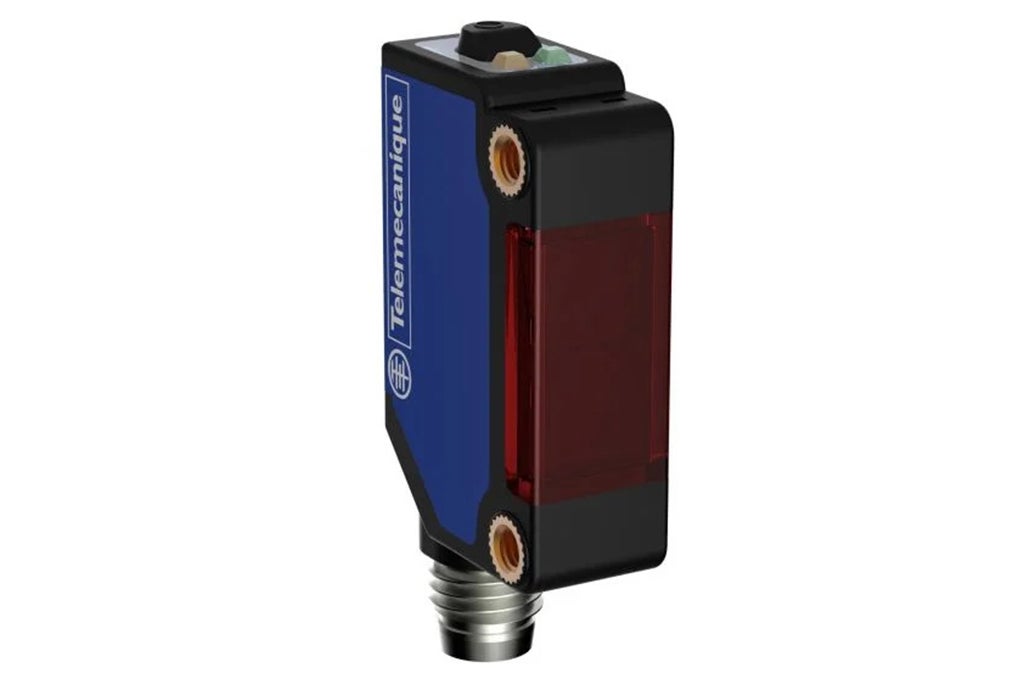
A photoelectric sensor is a sensor that detects the presence as well as the distance of an object with the help of light, hence the name.
A photoelectric sensor consists of an emitter that emits either visible or infrared light beam, a receiver that receives the light beam, and in some kinds of photoelectric sensors, a reflector that reflects the light beam towards the receiver.
The emitter in the photoelectric sensor emits a light beam, which, when received back by the receiver, 'reads' the light to detect the presence or the distance of any object present in its path. The reading is then converted into human-readable data and is given as output.
Largely used in industrial manufacturing, photoelectric sensors are extremely effective in detecting the presence, and absence, as well as for measuring the distance of an object. Photoelectric sensors are an integral part of automation since they offer quick results without the need for touching the object physically.
Types of Photoelectric Sensors
Some of the major industries that use photoelectric sensors include automotive, food and beverage, and pharmaceutical. Depending on the kind of work, different kinds of photoelectric sensors are used.
Based on how the photoelectric sensors operate, they can be divided into three types and they are reflective sensor, thru-beam sensor, and retroreflective sensor.
Given below are simple and short descriptions of how each different type works.
1. Diffuse-reflective sensor
In this type of photoelectric sensor, the emitter and the receiver of the light beam are housed within the same box. The light is emitted from the emitter and is received back by the receiver. The received light beam is then read, and if there has been any object detected on the pathway, that is given in the output along with the distance of the object from the emitter/receiver.
2. Thru-beam sensor
A thru-beam photoelectric sensor is slightly different from the reflective sensor. The emitter and the receiver in a thru-beam photoelectric sensor are not housed within the same unit. Also known as the opposed mode, the emitter emits a light beam that is caught by the receiver placed somewhere else. If an obstruction is detected in the light's pathway, it is read, and the distance is given as output by the sensor.
3. Retroreflective sensor
In this third type of photoelectric sensor, there are three parts instead of two. Along with an emitter and a receiver, there is also a reflector. The light beam emitted from the emitter is aimed at the reflector, which then reflects the light beam back to the receiver. The emitter and the receiver are contained within the same unit. However, the reflector is placed elsewhere. When the light travels to the reflector from the emitter and back to the receiver, any obstructions in the pathway are recorded, and the distance is measured. The output is then displayed as a readable numerical value.
Applications of Photoelectric Sensor
Photoelectric sensors are widely used across multiple industries due to their versatility and precision. These sensors enable automation, quality control, and safety monitoring, enhancing productivity in various sectors. Schneider offers a compact photoelectric sensor that is particularly known for its durability and accuracy in industrial applications. The brand is also celebrated for offering the most competitive photoelectric sensor price. Below are the most common applications of photoelectric sensor.
Industrial Automation
Use of photoelectric sensor is essential in automated assembly lines, detecting the presence of parts, verifying object positioning, and counting items. They help improve efficiency in production processes, ensuring seamless workflow management.
Security and Surveillance
Different photoelectric sensor types play a vital role in security systems. They detect unauthorized entry, movement, or obstructions in restricted areas. Thru-beam sensors are commonly used in perimeter security applications.
Material Handling and Warehousing
In logistics and warehousing, applications of photoelectric sensor are to detect packages, guide robotic arms, and manage conveyor systems. These sensors help streamline inventory management. Use of photoelectric sensor in material handling and warehousing is important as they help improve order fulfillment accuracy.
Medical and Pharmaceutical Industry
In healthcare, compact photoelectric sensor ensures precise positioning of medical devices and equipment. They are also used in pharmaceutical packaging lines to verify the presence of bottles, vials, and labels.
Advantages of Photoelectric Sensor
Different photoelectric sensor types offer numerous advantages over other detection technologies. This makes them a preferred choice for industrial and commercial applications. Their non-contact operation, high-speed response, and adaptability contribute to improved automation and efficiency.
High Precision and Accuracy
Photoelectric sensors provide precise detection even for small or transparent objects. Schneider photoelectric sensor ensures high accuracy. Use of photoelectric sensor reduces errors in automated processes.
Fast Response Time
Photoelectric sensors detect objects in milliseconds. This feature is crucial for high-speed conveyor belts and automated machinery. The timely detection prevents defects and improves quality control.
Non-Contact Operation
Photoelectric sensors do not require physical contact with objects. This reduces wear and tear. It also increases the lifespan of the sensors and minimizes maintenance costs.
Wide Sensing Range
Photoelectric switch sensor offers a wide range of detection capabilities, from short-range detection in compact applications to long-range detection in large-scale industrial setups. Thru-beam sensors provide extensive detection coverage.
Versatile Mounting and Integration
Compact photoelectric sensors are easy to install in various environments. Their adaptability allows integration into diverse applications, including robotics, packaging, and automotive industries.
Photoelectric Sensor Working Principle
The photoelectric sensor working principle is based on the transmission and reception of a light beam. The sensor emits light towards an object. The receiver detects the reflection or interruption of this light. This change in light intensity is then converted into an electrical signal. It triggers a response in connected machinery or control systems.
Signal Processing in Photoelectric Sensors
Photoelectric switch sensor incorporates advanced signal processing to filter out false detections caused by ambient light or dust. Schneider photoelectric sensor features smart filtering mechanisms. They ensure accurate and stable operation even in challenging environments.
Operating Modes
• Light-ON Mode: The output is activated when the sensor detects light.
• Dark-ON Mode: The output is activated when no light is detected.
• Adjustable Sensitivity: Some sensors allow users to fine-tune detection sensitivity based on environmental conditions.
Interference Protection
Photoelectric sensors use polarization filters and frequency modulation. This helps them avoid interference from external light sources. These features enhance detection reliability. It makes them suitable for outdoor and high-precision applications.
How Does a Photoelectric Sensor Work
How does a photoelectric sensor work? Photoelectric sensors operate by emitting a light beam from an emitter to detect the presence or absence of an object. The sensor processes the change in light intensity and converts it into an electrical output when the beam is reflected. These sensors are widely used in industrial automation. This is because of their precision and reliability. Schneider photoelectric sensor is designed for high-performance object detection. This makes them ideal for manufacturing, packaging, and security systems.
Components of a Photoelectric Sensor
A photoelectric sensor consists of an emitter, receiver, signal processor, and output module. The emitter generates a light beam. On the other hand, the receiver detects changes in the beam’s intensity. The signal processor interprets this data and triggers an electrical output. This is then used to control machinery or trigger alarms.
Detection Methods
Photoelectric sensors use three primary detection methods: thru-beam, diffuse-reflective, and retroreflective. Each method is suited for different applications. Thru-beam sensors detect objects by interrupting a continuous light beam. Diffuse sensors, on the other hand, detect objects based on reflected light. Retroreflective sensors use a reflector to bounce the emitted beam back to the receiver.
Light Sources Used in Photoelectric Sensors
Photoelectric switch sensor utilizes different light sources, such as infrared, visible red, or laser light. Infrared light is commonly used for general-purpose detection. However, visible red light allows for easy alignment. Laser sensors provide high precision for detecting small objects or positioning applications.
What is the output of a photoelectric sensor?
The output of a photoelectric sensor can be of two types, namely digital and analogue. Digital outputs can be either on or off and are typically known as sinking outputs (NPN) or three-wire sourcing outputs (PNP). The only exception to this is the relay output that usually comes with an isolated or dry contact that requires one pole to be voltage driven.
Analogue outputs, on the other hand, are dynamic and can provide continuous readings in either voltage (0-10 volts) or current (4-20 mA). While voltage outputs have more interface options and can be easily integrated into control systems, they also have the disadvantage of not running more than 50 feet. Current outputs, on the flip side, can run longer distances without the problem of electrical noises.
Some advanced photoelectric sensors can also provide network communication or outputs in serial for higher-level devices.
Also Read: What is a Sensor, Types & How Does it Work
Schneider Electric EShop for best photoelectric sensors
All three kinds of photoelectric sensors each have different advantages and disadvantages and are used for different purposes. However, regardless of the kind of photoelectric sensor you are looking for, if you want the best quality, look no farther than Schneider Electric eShop. Featuring different kinds of photoelectric sensors and electronic sensors, you will surely find the kind you are looking for at the Schneider Electric eShop.
In fact, the eShop is home to numerous other electrical devices and appliances. The Schneider Electric eShop is a one-stop destination for all your electrical needs. Visit the website, browse through the listed products, and buy from anywhere at affordable prices.
FAQs
Q1. How do I choose the right photoelectric sensor for my specific application?
A. Selection of the right photoelectric sensor depends on the application, object type, detection range, and environmental conditions. Thru-beam photoelectric sensor types are best for long-range detection. However, diffuse-reflective sensors work well for close-range applications. Retroreflective sensors are ideal for detecting shiny or transparent objects. You must also pay attention to the photoelectric sensor price.
Q2. What is Diffuse Mode Photoelectric Sensor?
A. A diffuse mode photoelectric sensor detects objects based on light reflection. The emitter and receiver are in the same unit, and detection occurs when an object reflects the emitted light back to the sensor. These sensors are ideal for automation systems requiring precise object detection without needing reflectors.
Q3. What are photoelectric sensors used for?
A. Photoelectric sensors are used in automation, manufacturing, security, and medical industries. They help in object detection and safety applications. Their versatility makes them essential for improving efficiency and accuracy in industrial processes.
Q4. What is the sensing range of a photoelectric sensor?
A. The sensing range of a photoelectric sensor varies by type. Thru-beam sensors have the longest range (up to 100 meters), retroreflective sensors have a medium range (up to 10 meters), and diffuse-reflective sensors have a shorter range (up to 2 meters). The application determines the required sensing range.
Q5. Are photoelectric sensors resistant to environmental factors?
A. Most photoelectric sensors are designed to withstand dust, moisture, and temperature variations. Schneider photoelectric sensor comes with protective casings and advanced filtering technology. This enhances performance in harsh environments.
Q6. What is the difference between diffuse and retroreflective photoelectric sensors?
A. Diffuse sensors detect objects based on light reflection. On the other hand, retroreflective sensors use a reflector to bounce light back to the receiver. Retroreflective sensors are better for detecting transparent or shiny objects. However, diffuse sensors work well for matte or irregular surfaces.

Comments